I Tried to Change Everything at Once. Then I Tried Changing One Thing a Month. This Is What Happened.

For a long time I kept trying to live more intentionally — and kept quietly failing. Not in dramatic ways. In the specific, ordinary way of someone who starts a journaling practice and a meditation habit and a reading discipline all at once, sustains all three for approximately eleven days, and then sets them down when life asks something of them.
The problem was not motivation. It was not time. It was the scope of the ask. I was trying to change everything at once rather than becoming one slightly different person, one practice at a time.
"What if I tried one thing? Just one. For one month. With my full attention on it."
That question became Slowly Curated.
What slow living for beginners actually looks like
Slow living is not a morning routine or an aesthetic. It is not waking up at five, owning fewer things, or having a beautifully organized home. Those might come with it. But they are not the thing itself.
Slow living — the version I am practicing — is the decision to do fewer things with more attention. To notice what is actually happening rather than rushing through it in the direction of something else. To let one practice genuinely teach you something before moving on to the next.
For beginners, this sounds abstract until you try it with something specific. A candle you pour yourself. A herb you grow on a windowsill. A loaf of bread you make with your hands. Five minutes of writing honestly about what the week actually felt like, not what you wish it had felt like.
One thing. One month. Full attention. The simplest possible entry point — and the only approach I have found that actually compounds into something real across a year.
What a slow study is
I call each monthly practice a slow study. The word is deliberate. A study is not a challenge, not a habit-formation system, not a thirty-day transformation program. It is simply something you pay close attention to for a sustained period — with the goal of learning from it, not of performing it.
When candle making is your slow study, you are not just lighting a wick at the end of the month. You are noticing what happens between the first pour and the fourth. You understand why some fragrances work and others don't. You learn something — about craft and, incidentally, about the kind of patience you are capable of when the subject is interesting enough.
The slow study method removes the pressure of mastery and replaces it with the more honest goal of genuine attention. By the end of a month, you may not be skilled. You will almost certainly have noticed things you would have missed if you had done the practice casually or not at all. That noticing is what carries forward into every slow study after it.
If this is the kind of thing you want in your inbox every week — the free Journaling Starter Kit arrives immediately when you subscribe.
What Slowly Curated is
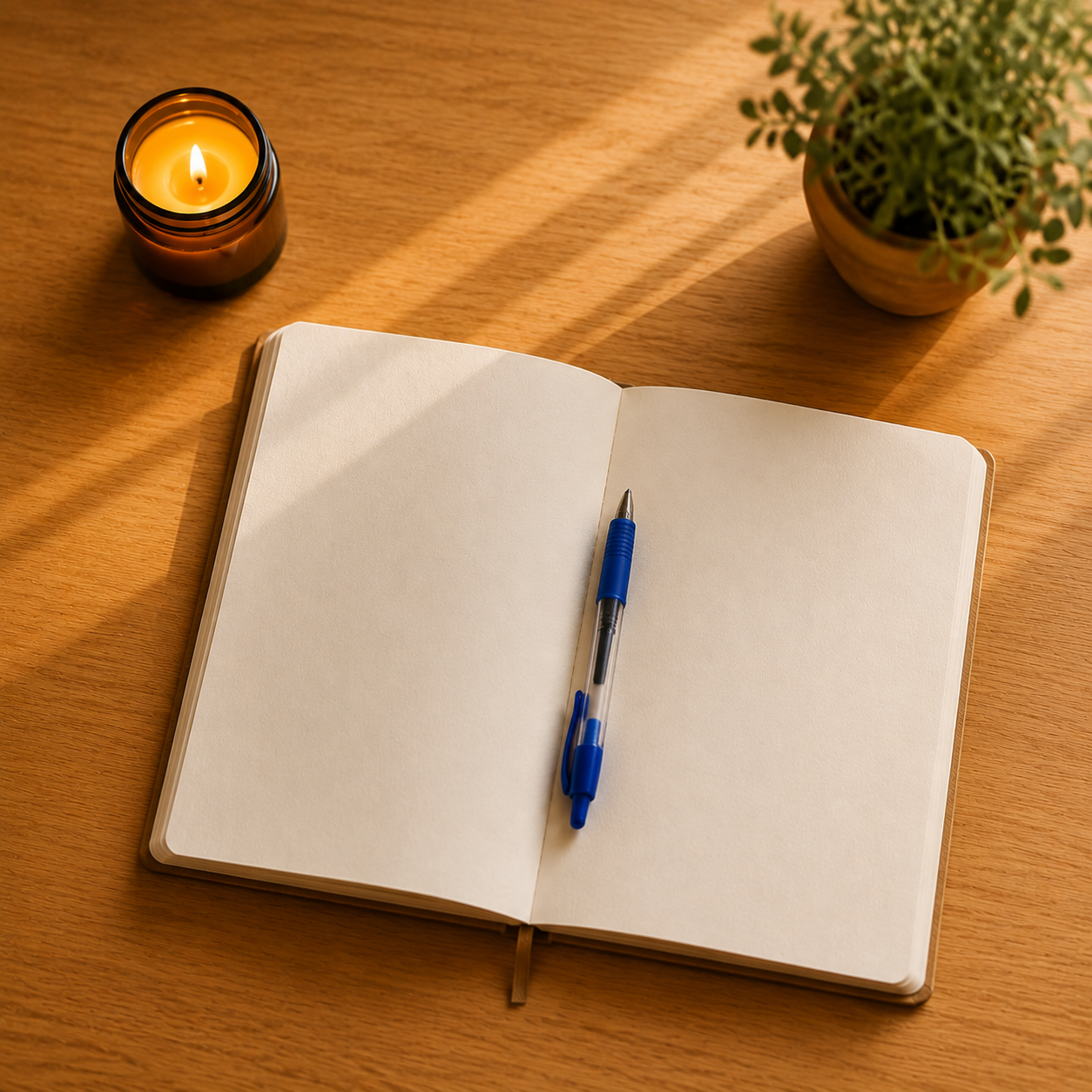
Slowly Curated is built around one year of slow studies. Twelve months, twelve practices — each explored with intention, without pressure, and documented honestly. The subjects are chosen for their season, their sensory richness, and the specific kind of attention each one trains.
Month 01 is journaling. What comes after — I'll tell you when we get there. Each month, the next study is revealed to subscribers first, a few weeks before it begins. There are twelve in total. The subjects are chosen for their season, their sensory richness, and the specific kind of attention each one trains. The year is designed so that what you learn in one month carries into the next.
I am one month ahead at most — trying the practice first, documenting what actually happens, and writing honestly about the parts that went wrong alongside the parts that worked. That is the only promise this brand makes.
What Slowly Curated is not
It is not a productivity system. There are no goals to hit, no metrics to track, no definition of success except showing up.
It is not a wellness brand. I am not going to tell you what to eat or how to optimise your morning routine or what supplements to take.
It is not a perfect life, aesthetically documented. Some of this will go badly — the candle that cracks, the sourdough that doesn't rise, the journal entry that reveals something uncomfortable — and I will tell you about those parts honestly.
What it is: an honest record of someone trying to live more slowly, one small thing at a time. And an invitation to try alongside, at your own pace, with your own version of each practice.
Who this is for
If you have ever started something and stopped.
If you have felt like you know how you want to live but keep not quite getting there.
If you are tired of trying to change everything at once and looking for an approach that is genuinely sustainable over a year of intentional living — this is for you.
I still do not have everything figured out. I am not writing from the other side of a transformation. I am writing from inside one that is still happening. This brand is growing alongside me.
The newsletter is where Slowly Curated lives. Every Friday, one slow letter — one thing the current month's slow study is teaching me. No noise, no pressure, no unsolicited advice about your morning routine.
If that sounds like something you want to follow — the free Journaling Starter Kit arrives immediately when you subscribe. 10 prompts, the 5-minute method, a presence tracker.
