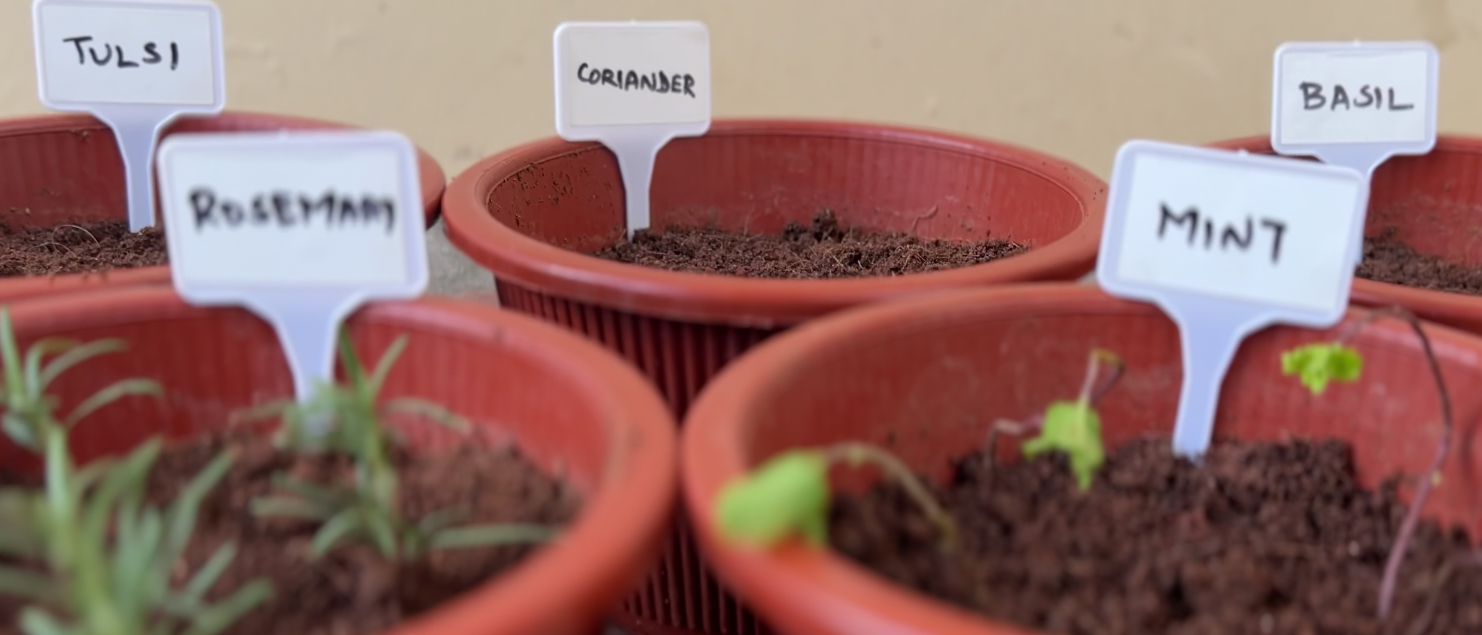
I didn’t begin this experiment knowing how to garden.
There were five small pots, a mixture of soil, coco peat and vermicompost, a collection of seeds and cuttings — and one question sitting quietly underneath all of it:
Would anything actually grow?
Growing herbs can sound simple when reduced to a sentence. Put a seed into soil. Water it. Give it sunlight. Wait.
But once the seeds are actually planted, the questions begin.
How deep should they go? Is this the right size of pot? Am I watering too much? Is that tiny thing coming out of the soil actually the plant — or just a weed?
And perhaps the biggest question of all:
What if nothing happens?
This month, Slowly Curated is turning towards herb gardening. Not to become an expert gardener in thirty days, but to spend some time learning what it means to grow and tend to something slowly.
This is where the experiment began.
Why herbs?
There are many things that can be grown — flowers, fruits, trees, vegetables. But herbs felt the right place to begin.
Partly because this time of year makes growing things feel especially inviting. There is rain, the smell of wet soil, fresh air, and greenery everywhere. Something about being surrounded by plants has a way of making the day pause for a moment.
But herbs also felt practical. Many of them are already familiar parts of everyday life. Coriander finds its way into the kitchen. Mint is used in drinks and food. Tulsi is grown in many homes. Rosemary can be used for cooking and other everyday rituals.
There is something particularly satisfying about the idea of eventually using something that began as a seed, a stem or a cutting in a small pot.
And for one-month Slow Study, herbs seemed like an interesting place to begin. They still require attention. Nothing can be rushed into growing. But there is also the possibility of seeing change sooner — and perhaps learning something from that process along the way.
This wasn’t the first time something had been planted
There is already a garden at home. Seeds have been planted before. Some have grown. Some haven’t.
Mint has also been grown from store-bought stems before. The lower leaves were removed, a few fresh leaves were left at the top, and the stems were placed in water until small roots appeared. Eventually, they were planted in soil and continued growing.
There was also a succulent once.
It was placed indoors and seemed perfectly fine for the first few days.
Eventually, it died.
So this wasn’t a completely new relationship with plants. The difference this time was intention.
Instead of planting something and occasionally noticing it later, the idea was to actually pay attention. To watch. To notice what changed. And perhaps more importantly, to notice what didn’t.
The five herbs
The experiment began with five herbs — not because five is a perfect number for a beginner garden, but because these were herbs that felt practical, familiar or interesting enough to try.
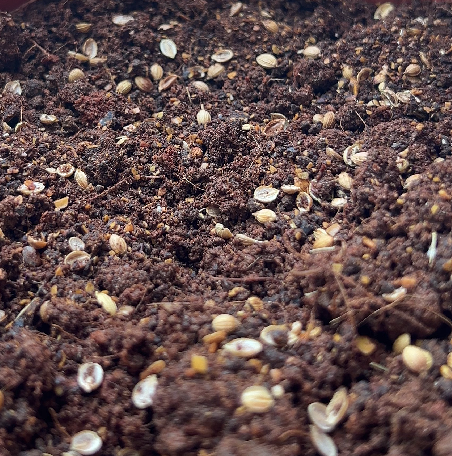
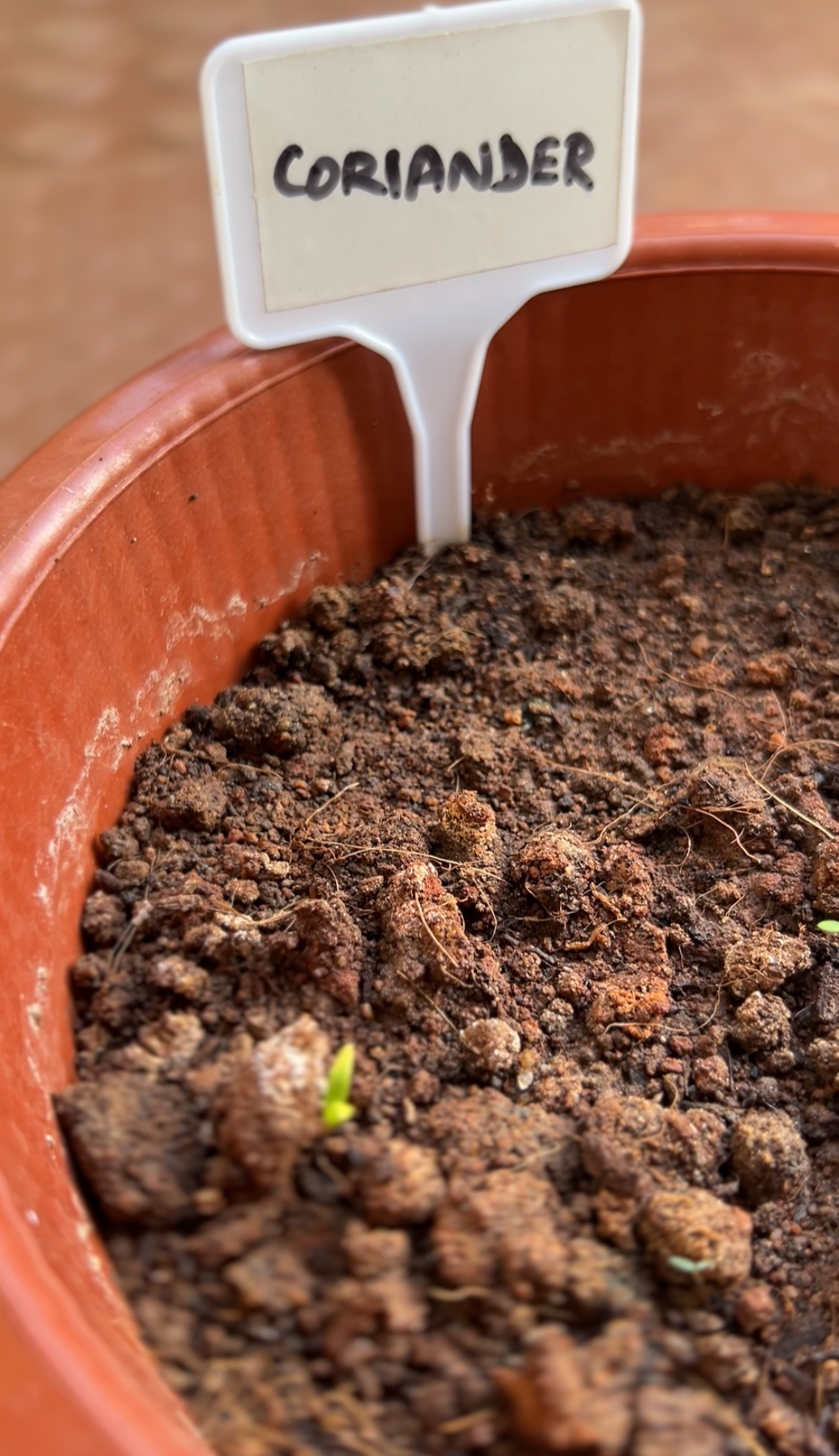
Coriander was the experiment. It was grown from seeds, despite all the warnings that coriander can sometimes be difficult to grow. Some seeds were soaked before planting to see whether that would help with germination. Coriander roots with a little stem attached were also placed in water after seeing that they might grow new leaves. For now, coriander doesn’t seem interested in giving immediate answers.
Tulsi began with what was already there. There is already a tulsi plant growing in the garden, and sometimes its seeds fall nearby and new little plants appear. This time, seeds from the existing plant became part of the experiment. The smallest seeds were also some of the most fascinating. It’s difficult to look at something so tiny and immediately understand how it might eventually become a full plant.
Basil became an experiment with familiar seeds. Another pot was planted using seeds commonly known at home as sabja or sweet basil seeds. The goal was simply to see what would happen. Sometimes beginning a Slow Study means choosing something familiar without already knowing exactly how it will turn out.
Rosemary began as a cutting. A rosemary plant had recently been bought, and instead of beginning from seed, this experiment started with a cutting. Growing something from a cutting feels slightly different from planting a seed. There is already something there — a stem, leaves, a visible beginning. But whether it will continue growing is still uncertain. During the first week, the rosemary stayed fresh. There was no visible growth yet, but it stayed alive. At that point, that felt enough.
Mint was a familiar territory. It had already been grown successfully before, so four stems were planted this time. But by Day Four, three of the four had started dying and their leaves were facing downward. By the end of the week, only one stem remained fresh. It was an unexpected reminder that even something familiar doesn’t always behave the same way twice.
The setup was simple
There was no attempt to create a perfect gardening system.
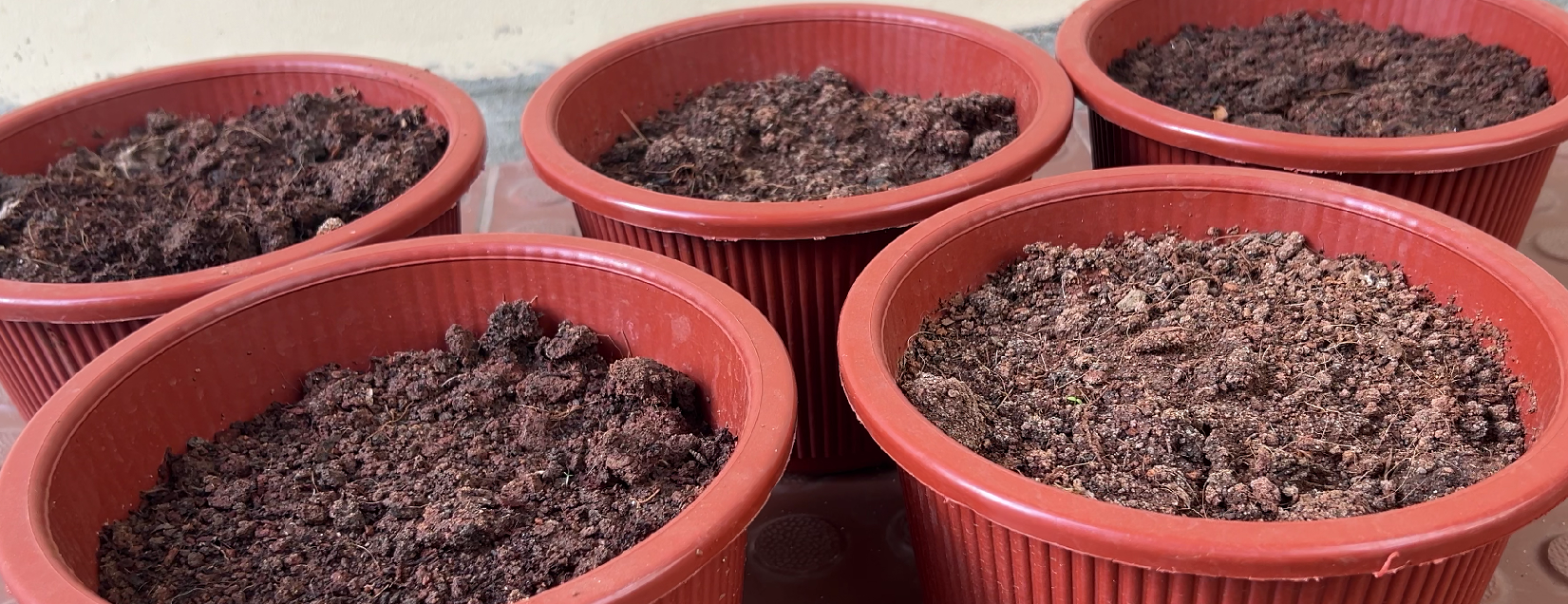
Five small brown terracotta-style plastic pots were used and placed along the garden wall. The soil mixture was made from red soil, coco peat and vermicompost.
The area receives plenty of sunlight, although the pots were placed where they could receive softer sunlight and only a few hours of harsher sun.
There is a plenty of advice online about creating different soil mixtures and conditions for different plants. And while that information can be useful, there was one decision made early in the experiment:
This didn’t have to become complicated before it even began.
There was no pressure to buy a different type of soil for every herb. The idea was to begin with what was available, pay attention, and learn along the way.
That felt more sustainable than trying to get everything perfectly right on the first day.
A little something for your inbox
If you like these small experiments in intentional living, The Slowly Letter is where I share what I’m learning beyond the posts here — small observations, gentle prompts and things worth slowing down for.
JOIN THE SLOWLY LETTER
No noise. Just one thoughtful letter, occasionally.
The questions began almost immediately
The first question was about pots.
What size should they be?
Then came another:
How deep should the seeds go?
And after planting came an entirely different set of questions.
Was the soil too dry? Was it too wet? Should more water be added?
During the first couple of days, the soil was checked constantly. There was some carefulness around watering too much. Then, eventually, that worry had to be loosened a little.
The plants were watered when needed, and during the rainy days, they weren’t watered unnecessarily.
There was also another question waiting beneath the surface:
If something eventually appeared, how would we know it was actually the herb — and not a weed?
Gardening, it turns out, creates a surprising number of questions.
Seven days of mostly waiting
Day One was busy.
The pots were prepared. Soil was mixed. Seeds were planted. Cuttings were placed into their new homes. Everything felt active.
And then came Day Two.
Nothing had changed.
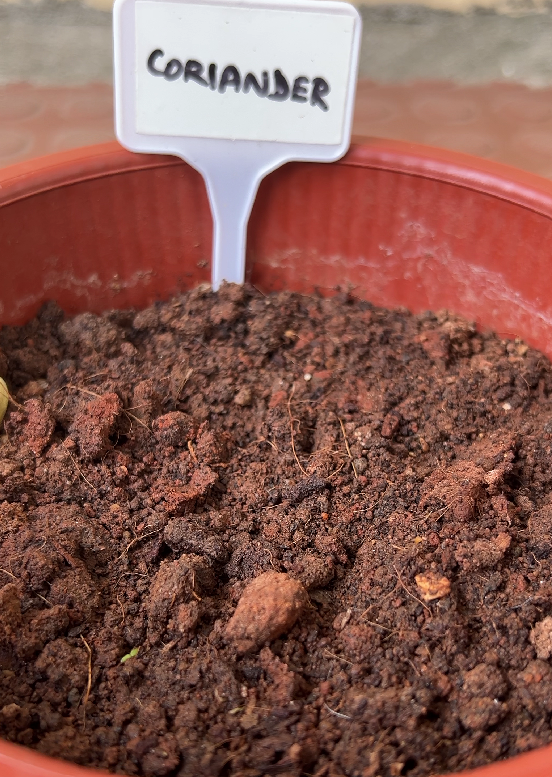
Day Three was much the same. The coriander, tulsi and basil still had nothing visible above the soil. The rosemary remained fresh.
Day Five came.
Still no sprouts.
One mint stem remained fresh. The rosemary was still doing well. The other pots remained quiet.
Day six and Day Seven looked almost exactly the same.
And that was the first week.
Not a garden full of herbs.
Not a dramatic transformation.
Mostly preparation, observation and waiting.
The first week of growing was really a lesson in waiting
There is strange expectation that when something is planted, progress should immediately become visible.
A seed goes into the soil.
Something should come out.
But growth doesn’t always offer visible proof that it is happening.
For the first week, the pots were checked every morning. There was anticipation around seeing the first sprout, along with the occasional worry that something had been done wrong.
Why hasn’t anything appeared yet?
Am I watering correctly?
Did the seeds actually germinate?
But perhaps this is where the Slow Study really begins.
Growing something cannot be forced by checking it more often. A seed doesn’t grow faster because it is watched every hour.
There is preparation.
There is care.
And then there is waiting.
The Slow Study of Tending
At the beginning of this experiment, tending meant constantly looking after something. It sounded like continuous care — a lot of checking, a lot of making sure.
A week later, it feels slightly different.
Tending may be knowing when to act.
And knowing when to wait.
The soil can be prepared. The seed can be planted. A cutting can be given a place to grow. Water can be added when needed.
And then there is a part that cannot be done for the plant.
Growth has to happen in its own time.
Perhaps that is what this month will explore.
Not just how herbs grow. But what happens when attention becomes quieter.
When care doesn’t always mean doing more.
When tending means doing your part — and allowing the rest to unfold.
For now, there are still five pots along the garden wall.
One rosemary cutting remains fresh. One mint stem is still holding on. And somewhere beneath the soil, perhaps, something is happening.
Or perhaps not yet.
Either way, the experiment continues.