Week 4 of Growing Herbs: Learning When to Let Things Grow
At the beginning of this month, I wasn’t sure whether any of my seeds or cuttings would actually grow.
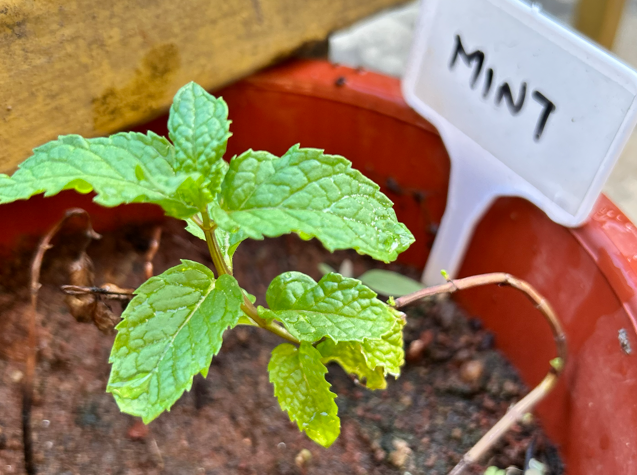
Four weeks later, I have coriander stems leaning over the edge of their pot, a mint stem with surprisingly large new leaves, and tiny rosemary leaves appearing on three of my cuttings. Basil and tulsi, on the other hand, are still keeping me waiting.
It has been a little bit of a roller coaster, but looking at the pots now, I’m genuinely happy with how far they’ve come.
The ones that surprised me
The biggest surprise this week was coriander.
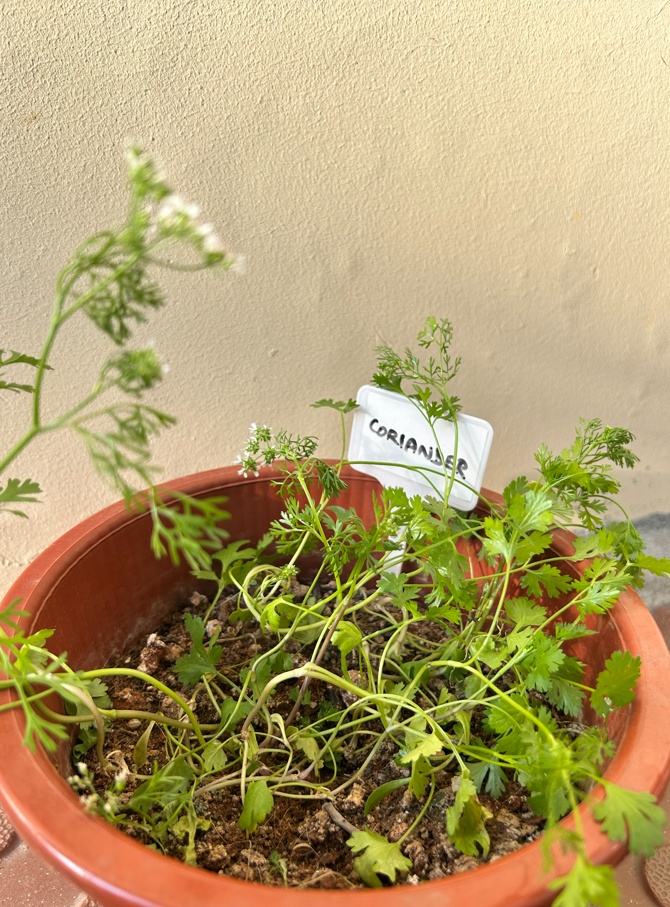
At the beginning of the week, there were suddenly many new sprouts. By the end of the week, some had grown into much larger stems. They even started leaning down because of their own weight, and the rain didn’t help.
I remember being a little worried about coriander earlier because I’d heard that it could be difficult to grow. For about ten days, I saw nothing, so seeing so many sprouts appear after that felt especially satisfying.
The mint has also been a small success story.
It was the only surviving stem in the entire pot, so I wasn’t expecting much from it. But this week, the new leaves became noticeably bigger. There was actual visible progress, and it made me really happy to see that one little stem continuing to grow.
The rosemary gave me another small reason to be hopeful. Three stems started showing tiny new leaves, while two others eventually died.
Not everything made it, but there was still enough new growth to make me stop and look a little closer.
And then there were basil and tulsi
Basil and tulsi are still empty.
I think I’ve accepted that a little more now, although I’m still frustrated by it. The funny thing is that I found another basil plant growing randomly somewhere else in my garden, nowhere near the pot where I planted my seeds. Of course, I laughed when I saw it.
Tulsi was a little harder to look at.
The original tulsi plant I took the seeds from is growing more flowers and seeds, while the pot where I planted those seeds is still empty. There was something slightly sad about seeing the two side by side.
But I’m not giving up on them. I would still like to try growing both again.
Learning to tend without hovering
Something else changed this week, though.
I still pick up my pots once a day. I check them while watering and sometimes look at them when I walk past. But I don’t feel the same need to constantly check whether something has changed.
I also didn’t interfere very much.
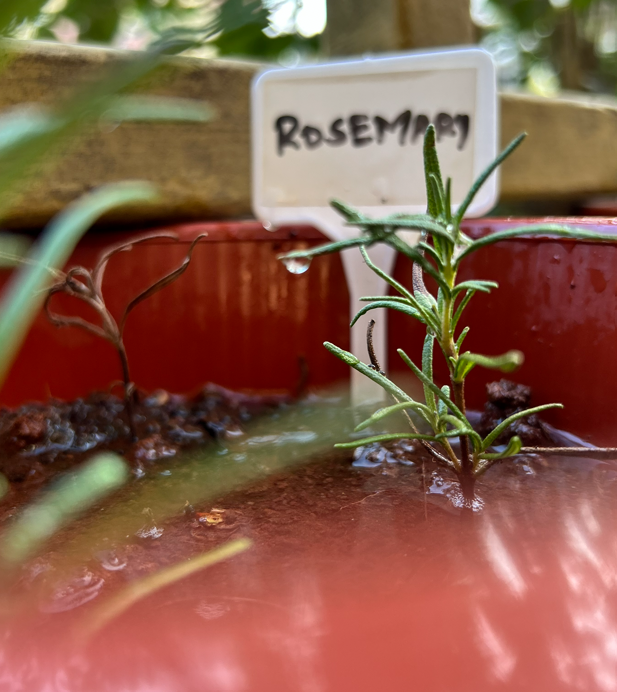
There was rain on some days, so I watered less and checked whether the soil had released the excess moisture and whether the water had drained properly. I removed a few dead leaves and stems that had fallen into the pots, but there was no trimming or repotting.
When the larger coriander stems fell over from their weight and the rain, I touched them to make sure they were still strong and alive.
And then I left them alone.
That might sound like a very small thing, but for someone who started this month wondering whether I was doing enough, it felt like progress.
I think I finally understood that tending didn’t mean constantly doing something.
Sometimes it means checking.
Sometimes it means helping.
And sometimes it means leaving something alone and letting it grow on its own.
I stopped comparing
Another thing I didn’t expect was to stop comparing my plants with everyone else’s.
Last week, I was frustrated seeing other people’s herbs growing while some of mine seemed to be doing nothing. This week, I didn’t really look at other gardening posts.
Instead, I started paying attention to what was actually happening in my own pots.
And that made a difference.
My coriander doesn’t need to grow at someone else’s pace. My mint doesn’t need to look like someone else’s mint. Basil and tulsi don’t have to prove anything by growing within my timeline.
They’re just growing — or not growing — at their own pace.
And maybe that’s enough for now.
One little experiment I almost didn’t tell you about
I had one more experiment running quietly in the background.
I came across an Instagram account showing someone growing an avocado plant from scratch. I liked the idea so much that I decided to try it too.
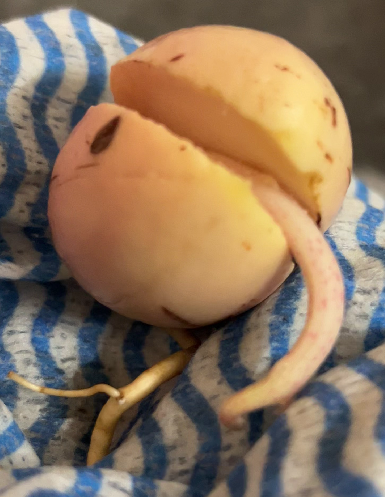
I soaked an avocado seed in water for a day, removed its skin, wrapped it in a damp cloth, put it inside a ziplock bag and left it somewhere dark in my room.
And then I completely left it alone.
For a month.
I wasn’t even sure anything would happen.
When I finally checked it after four weeks, there was a root.
A ROOT.
I was so happy and excited when I saw it.
It was such a small thing, but after spending this month constantly watching tiny plants for signs of growth, finding a root after deliberately leaving something alone felt almost perfect.
Maybe sometimes the best thing you can do is gove spmething the conditions it needs and then step back.
What four weeks of growing herbs taught me
I thought growing herbs would be easy at a certain level. What I didn’t expect was how invested I would become in whether something would grow.
There is something so warming about seeing a plant appear from something you planted yourself.
Four weeks didn’t make me an expert. I still don’t know exactly what I’m doing all the time. But I have a basic understanding now of how differently plants can grow, how unpredictable they can be, and how much patience they can ask for.
Most importantly, I think I’ve learned that learned that tending doesn’t have to mean constantly looking after something.
You can check in.
You can help when something needs help.
And then you can let it grow.
Out of my five original herb experiments, at least three are still thriving, and I’m happy with that.
I’ll probably try basil and tulsi again someday. And if they finally sprout, I’ll definitely come back and show you.
For now, I’m just happy I started.
A little something for your own slow start
If you’ve been wanting to start your own little growing experiment, I’ve put together a free Herb Garden Starter Kit in the Slowly Curated Freebie Library.
It’s made for beginners who want to start small, notice what changes, and learn as they go — without turning gardening into another thing to be perfect at.
You can find the freebie library here and choose the resource that feels right for you.
Next month: making light
And just like that, this Slow Study is coming to an end.
Next month, I’m moving from growing things to making something with my hands.
October will be a month of candle making.
With Diwali around the corner, I want to explore what it feels like to make my own little sources of light — from melting the wax to experimenting with scents, colours and different shapes.
A new month, a new beginner experiment, and another chance to slow down and pay attention.
See you in the next Slow Study.
